

The First 7 Days Can Decide Everything
Chapter 1
Cornish Cross chicks exploring under a heat lamp in a clean straw-lined brooder during their first week at Hayoo's Farm.
Why do baby chicks need a heat lamp?
(Hint: It's not because they're "cold.")
Imagine this.
You're born into a world you've never seen before.
You can walk within hours.
You instinctively know how to eat.
You even look like you're wearing a tiny feather coat.
But there's one problem.
Your body can't keep itself alive.
Not yet.
When our Cornish Cross chicks arrive at Hayoo's Farm, they're only hours removed from the hatchery.
They're curious.
Fragile.
Completely dependent on us.
For the first week of their lives...
we become what nature designed their mother to be.
The Truth About the Heat Lamp
Most people think the heat lamp exists to warm the chicks.
That's true...
but it isn't the whole story.
The lamp isn't replacing warmth.
It's replacing a mother hen.
If these chicks had hatched naturally, they wouldn't spend every minute running around.
They'd spend much of the day tucked safely beneath their mother's feathers, stepping out only to explore, eat, and drink before disappearing back underneath her.
That cycle repeats hundreds of times a day.
The heat lamp simply gives them a place to do the same thing.
The Science Nobody Sees
Here's what's really happening.
A newly hatched chick can't regulate its own body temperature.
Its internal thermostat hasn't finished developing.
Without supplemental heat, it begins burning precious calories simply trying to stay alive.
Those calories were supposed to become...
stronger muscles.
Healthier organs.
A growing immune system.
The feathers that will one day keep it warm without any help.
Instead...
they're burned fighting the cold.
That's why we begin our chicks at about 95°F, lowering the temperature a little each week as their bodies develop and their feathers begin taking over the job.
Nature always has a plan.
Sometimes our role is simply buying time until that plan unfolds.
They Tell Us Everything
Here's one of our favorite parts.
The chicks tell us whether we're doing our job correctly.
They don't need thermometers.
They don't need words.
They simply behave.
If they're piled tightly together beneath the lamp...
they're too cold.
If they're scattered far away, avoiding the warmth...
they're too hot.
But when everything is just right...
they spread out naturally.
Some eat.
Some drink.
Some chase each other across the bedding.
Others wander back beneath the lamp for a quick warm-up before heading out again.
Healthy chicks don't just survive.
They behave with confidence.
And that's exactly what we want to see.
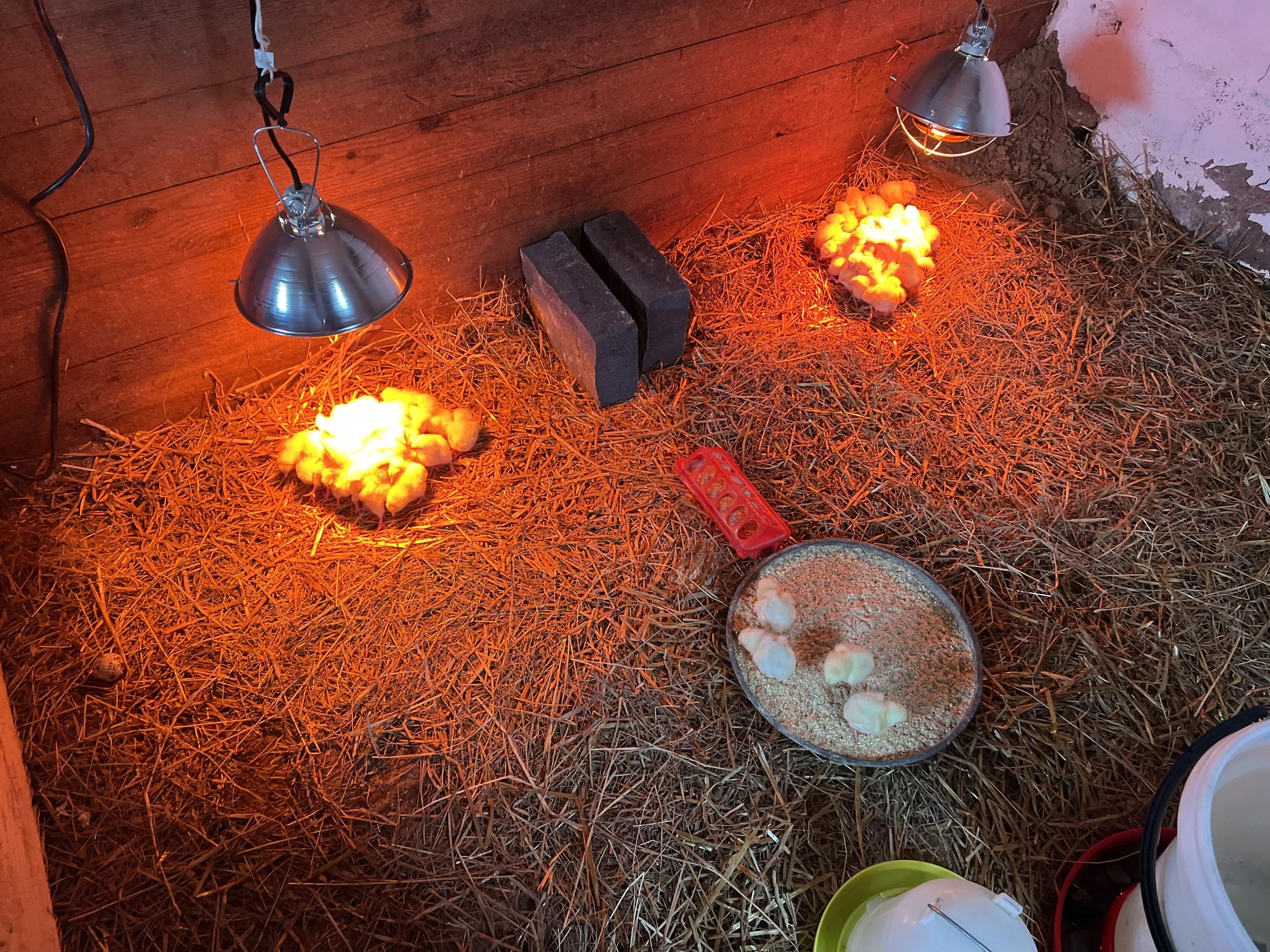
Chicks are too cold if they are huddled like this
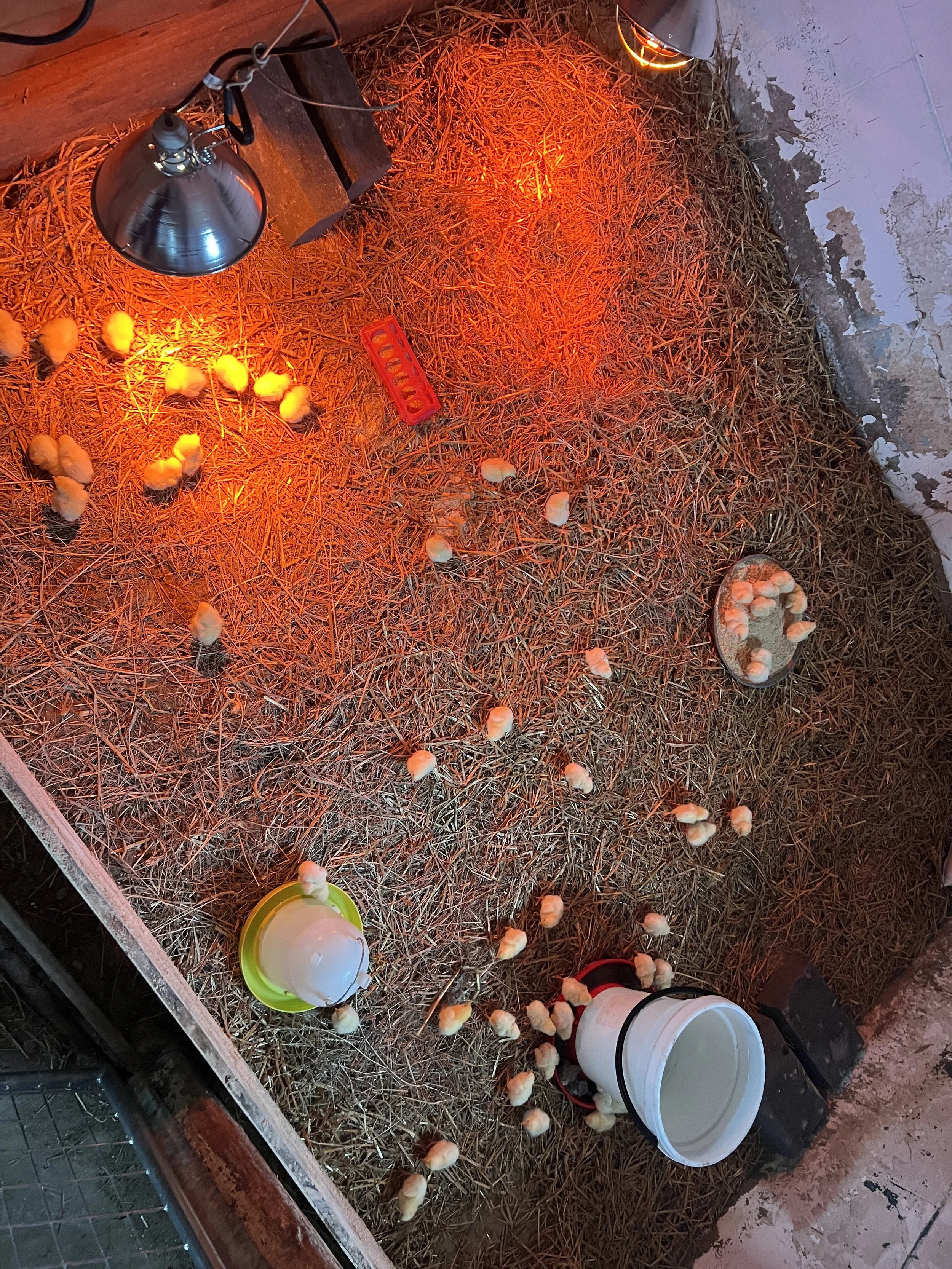
Birds scattered means they are comfortable
The Things Most People Never Think About
Fresh bedding.
Clean water.
Feed that's always available.
The right temperature.
Each one seems small.
But remove just one...
and the entire system begins to fail.
Healthy chickens aren't created by one big decision.
They're created by hundreds of small ones.
Most people never witness those moments.
We do.
Every single day.
Before They Ever Touch Grass
People often picture farming as birds roaming green pasture beneath blue skies.
That part is beautiful.
But it isn't where good farming begins.
It begins here.
Inside a warm brooder.
Checking the water one more time before bed.
Watching behavior instead of guessing.
Adjusting the heat because tomorrow's forecast changed.
Paying attention when no one else is watching.
Long before our chickens ever reach fresh pasture...
they first learn to trust the environment we've created for them.
One Question
The next time you eat chicken...
ask yourself something.
What did the first week of that bird's life look like?
Was anyone paying attention?
Did someone notice if it was too hot...
or too cold?
Did anyone care enough to check one last time before going to bed?
Or was it simply one bird among thousands?
At Hayoo's Farm, we believe those first seven days matter.
Because how a bird begins its life shapes everything that follows.
Next Episode
The Day We Take Away Their Sun
The heat lamp has quietly kept them alive since the day they arrived.
Soon...
we'll turn it off.
Not because we have to.
Because they no longer need it.
Sometimes the greatest sign of good stewardship is knowing when to step back.
